In today’s competitive business landscape, the efficiency of procurement processes plays a crucial role in determining a company’s success. Tactical sourcing, often overshadowed by its strategic counterpart, is equally vital for organizations looking to meet immediate and short-term procurement needs. This blog delves into what tactical sourcing is, how it differs from strategic sourcing, and the various ways it can benefit businesses.
Understanding Tactical Sourcing
Tactical sourcing is a procurement approach focused on short-term, transactional purchasing activities. It is typically reactive, addressing immediate and often unanticipated purchasing needs. This approach contrasts with strategic sourcing, which is more proactive and focuses on long-term relationships and agreements to leverage the best possible value from the supply chain.
Benefits of Tactical Sourcing for Businesses
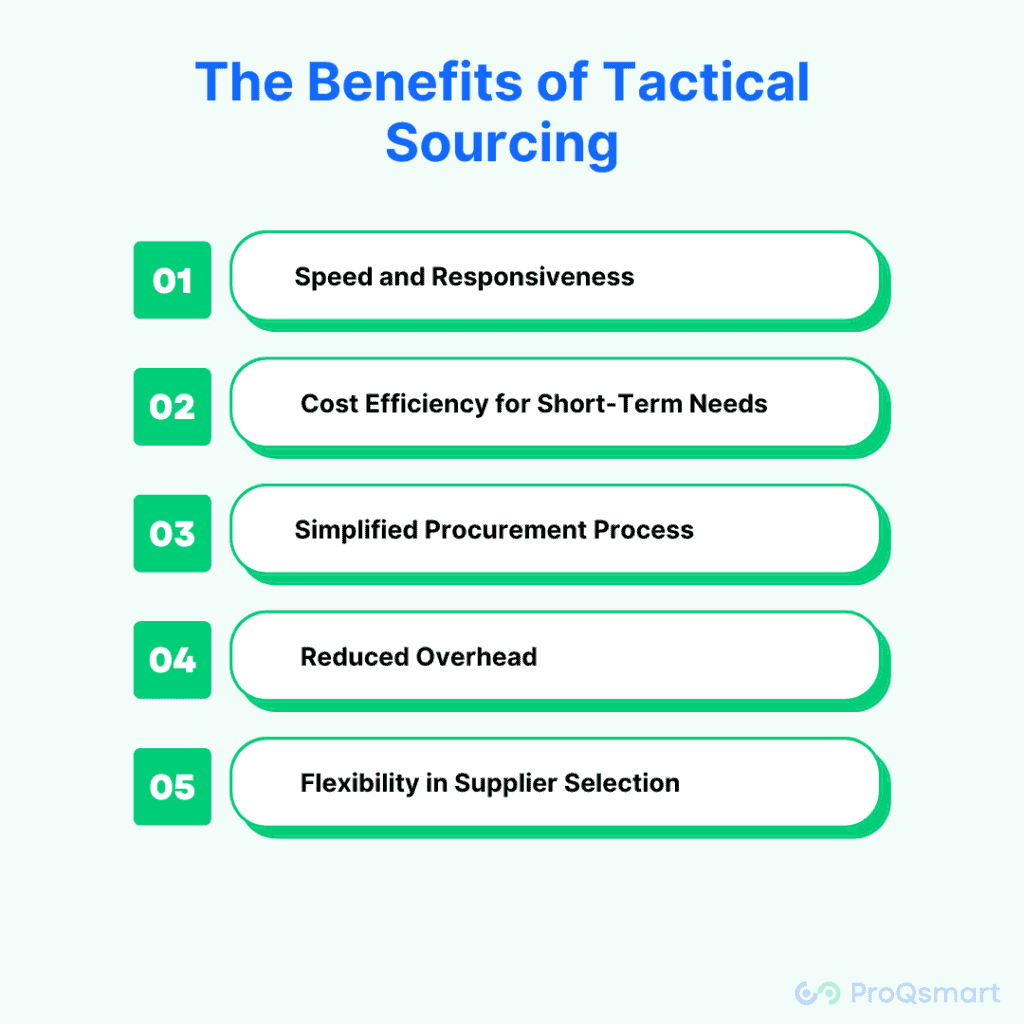
Speed and Responsiveness
Tactical sourcing allows businesses to quickly respond to immediate or emergency needs, ensuring that operations continue smoothly without delays.
Cost Efficiency for Short-Term Needs
It provides the flexibility to source materials or services as needed without long-term commitments, which can be cost-efficient for one-off or unexpected purchases.
Simplified Procurement Process
The process is less complex and involves fewer stages than strategic sourcing, allowing for faster decision-making and execution.
Reduced Overhead
By focusing on immediate needs, companies can avoid the overhead associated with maintaining large inventories or complex supply agreements.
Flexibility in Supplier Selection
Tactical sourcing does not typically require long-term supplier commitments, giving businesses the flexibility to choose suppliers based on current market conditions and availability.
Learn Unveiled eSourcing Strategy
Tactical vs. Strategic Sourcing
While tactical sourcing is characterized by its quick and responsive nature, strategic sourcing is defined by a deliberate, planned approach that often involves negotiation of long-term contracts focused on total cost of ownership (TCO) and supplier partnerships. Here’s how they compare:
Focus
Tactical sourcing focuses on immediate needs; strategic sourcing looks at long-term goals.
Cost Consideration
Tactical sourcing often prioritizes upfront cost savings; strategic sourcing considers the total cost over time.
Supplier Relationships
Tactical sourcing may involve one-time transactions; strategic sourcing often builds longer-term, strategic relationships.
Implementing Tactical Sourcing in Your Business
To implement tactical sourcing effectively, consider the following steps:
Identify Needs
Clearly define what goods or services are needed immediately.
Choose Suppliers
Select suppliers who can meet your immediate needs efficiently.
Streamline Procurement Processes
Ensure that your procurement processes are optimized for quick turnaround.
Monitor Performance
Keep track of how well the tactical sourcing strategy is meeting your business needs and make adjustments as necessary.
Conclusion
Tactical sourcing is an essential component of a well-rounded procurement strategy, particularly for businesses that need to balance long-term strategic goals with the agility to respond to immediate challenges. By understanding and effectively implementing tactical sourcing, businesses can ensure they remain competitive and responsive in the fast-paced market environment.