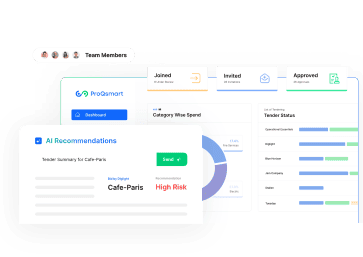
Scope gap detection is the automated process of identifying missing line items, incomplete descriptions, or unquoted services within a vendor’s bid submission. By utilizing automatic bid comparison software, procurement teams can instantly cross-reference a vendor’s quote against the original Bill of Quantities (BOQ). This technology ensures that every single requirement is accounted for before a contract is signed, preventing the “low-ball” bids that inevitably lead to expensive change orders during project execution.
For industries like construction, engineering, and contract manufacturing, the most dangerous bid isn’t the highest one—it is the incomplete one. A vendor might appear to be 10% cheaper than the competition, but if that discount exists only because they missed 20 line items in a complex 500-line BOQ, that “savings” will quickly evaporate. Once the project begins, those missing items return as change orders, often priced at a premium. Auto quote comparison is the only scalable way to protect your budget from these commercial blind spots.
The “Cheapest Bid” Trap: Why Manual Analysis Fails
The traditional method of analyzing bids—using Excel spreadsheets and manual data entry—is fundamentally flawed when it comes to risk management. When a Quantity Surveyor or Procurement Manager receives five different PDF quotes for a large project, their first instinct is to look at the bottom line.
If Vendor A quotes $1.2M and Vendor B quotes $1.0M, Vendor B looks like the winner. In a manual process, verifying why Vendor B is cheaper requires hours of line-by-line validation.
-
Fatigue Sets In: After manually copying 300 line items from a PDF into Excel, human eyes gloss over details.
-
Format Inconsistency: Vendors rarely follow the exact structure of your RFQ. They might group items, rename them, or bury exclusions in the fine print.
-
The Invisible Gap: In Excel, a blank cell is just a blank cell. It doesn’t scream “Risk.”
This manual friction creates a dangerous incentive to trust the “Total Cost” figure without scrutinizing the composition of that cost. This is where automatic bid comparison shifts the paradigm from “Data Entry” to “Risk Analysis.”
How Automatic Bid Comparison Detects Scope Gaps
Automatic bid comparison tools, such as ProQsmart, act as an intelligence layer that sits between the vendor’s messy documents and your final decision. Instead of a human manually checking if every item was quoted, the AI does it instantly.
Here is how the technology identifies scope gaps that humans miss:
1. Semantic Document Ingestion
The process begins with ingestion. You drag and drop the vendor’s quote—whether it is a scanned PDF, a Word document, or an Excel file—into the platform. The system uses Optical Character Recognition (OCR) and Natural Language Processing (NLP) to read the document. Unlike a simple text scraper, the AI understands the structure of a BOQ. It identifies descriptions, quantities, unit IDs, and total prices.
2. The “As-Asked” vs. “As-Quoted” Match
The core of auto quote comparison is alignment. The system takes your original RFQ (the “As-Asked”) and maps every vendor bid (the “As-Quoted”) against it.
-
Smart Mapping: If your RFQ asks for “Internal Door Frame, Type A” and the vendor quotes “Door Frame A (Internal)”, the AI uses semantic matching to align these rows.
-
Gap Identification: If the system cannot find a matching line item for “Door Frame, Type A” in the vendor’s document, it flags this as a Scope Gap.
3. Visual Heatmaps and Alerts
Data visualization is critical for speed. Once the alignment is complete, the dashboard displays a side-by-side comparison table.
-
The “Red Flag”: Missing items are not just left blank; they are highlighted, often in red or with a specific warning icon.
-
Incomplete Quantities: If you asked for 100 units and the vendor quoted for 80, automatic bid comparison flags this variance immediately.
The Financial Impact: Preventing the 25-40% Premium
Why is scope gap detection so financially critical? In the construction and projects world, a missing item that is discovered after the contract is signed becomes a Change Order (or Variation).
Change orders are notoriously expensive. Because the vendor has already been awarded the contract and is on-site, competitive tension is gone. They are no longer bidding against three other suppliers; they are the sole source for that missing item.
-
The Premium: Industry data suggests that items purchased via change order typically cost 25% to 40% more than if they had been included in the original competitive bid.
-
The Delay: Beyond direct costs, resolving scope gaps halts progress, leading to project delays and potential liquidated damages.
By using auto quote comparison to ensure 100% scope coverage before the award, you effectively lock in competitive pricing for the entire project scope.
Practical Scenario: The Electrical Subcontractor
To understand the power of this technology, consider a typical scenario involving an electrical package for a new commercial building.
-
The Scope: The RFQ contains 450 line items, including cabling, switchgear, light fixtures, and labor.
-
The Bids: Three subcontractors submit their quotes. Subcontractor B is $45,000 cheaper than the average.
-
The Manual Way: The procurement team sees the $45k savings and is tempted to award quickly to stay on schedule. They assume the lower price is due to lower labor rates or better material sourcing.
-
The Automated Way: The buyer uploads the three PDF quotes into ProQsmart. Within minutes, the automatic bid comparison engine generates a heatmap.
-
The Discovery: The heatmap reveals a strip of “Red” cells for Subcontractor B. They completely missed quoting for the “Emergency Lighting Battery Packs”—items 312 through 324.
-
The Resolution: The buyer contacts Subcontractor B: “Please revise your quote to include the emergency lighting.” Subcontractor B adds the missing items, raising their price by $55,000.
-
The Result: Subcontractor B is now more expensive than Subcontractor A. The buyer awards the contract to Subcontractor A, who had a complete scope from the start.
Without automatic bid comparison, the buyer would have awarded to Subcontractor B, only to be hit with a $55,000+ change order two months later, blowing the budget.
Beyond Gaps: Detecting “Alternative” Scope
Scope gaps aren’t always about missing items; sometimes they are about wrong items. Vendors often substitute specified brands or materials with “alternatives” to lower their bid price, sometimes without explicitly highlighting the deviation.
Auto quote comparison helps here as well. By presenting descriptions side-by-side, the AI highlights text differences. If the RFQ specifies “Copper Wiring” and the bid says “Aluminum Wiring,” the discrepancy is visible in the comparison view. While the AI matches the line item semantically, the buyer can easily verify if the specification was met, ensuring technical compliance alongside commercial compliance.
The Strategic Shift: From Admin to Risk Manager
Implementing automatic bid comparison does more than just save time on data entry; it elevates the role of the procurement professional. When you are no longer buried in spreadsheets trying to align rows, you have time to investigate the anomalies.
You can ask strategic questions:
-
“Why is Vendor C’s price for installation so much higher than the others?”
-
“Is Vendor A’s omission of the safety equipment a mistake, or do they believe it’s not required?”
-
“Can we split the award to get the best material price from Vendor X and the best labor rate from Vendor Y?”
Auto quote comparison gives you the visibility to answer these questions confidently. It transforms the procurement process from a clerical exercise into a strategic risk management function.
Conclusion: Complexity Requires Automation
As projects grow in complexity and Bills of Quantities expand to thousands of line items, manual validation becomes impossible. The human brain is not designed to cross-reference 5,000 data points across six different documents without error.
Automatic bid comparison is the necessary evolution for modern procurement. It ensures that when you see a “Total Cost,” it reflects the Total Scope. By detecting scope gaps instantly, visualizing risks through heatmaps, and ensuring true apples-to-apples comparisons, this technology is the most effective defense against the budget-destroying reality of change orders.
FAQs
1. What exactly is a “Scope Gap”?
A scope gap occurs when a vendor fails to provide a price or description for a specific item or service requested in the RFQ. It means the vendor’s total bid price is artificially low because it does not cover the complete project requirements.
2. How does automatic bid comparison detect these gaps?
The software maps the vendor’s quoted line items against the original RFQ list. If a specific item from the RFQ has no corresponding match in the vendor’s uploaded document, the system flags it as missing, usually highlighting it visually on a dashboard.
3. Can auto quote comparison work with scanned PDFs?
Yes. Advanced auto quote comparison tools use OCR (Optical Character Recognition) to read text from scanned images. They then use AI to interpret the layout, distinguishing between headers, line items, and prices, even if the document is not a digital text file.
4. Does this software replace the Quantity Surveyor or Buyer?
No, it empowers them. The software handles the tedious data extraction and alignment. The professional then uses that structured data to make decisions, negotiate terms, and verify technical compliance, focusing on high-value tasks rather than data entry.
5. What happens if a vendor combines two items into one price?
Intelligent automatic bid comparison tools can often detect bundled pricing. However, they typically flag this as an anomaly for the buyer to review. The buyer can then ask the vendor to split the cost or manually allocate the bundled price across the relevant line items in the system.
6. Can it handle bids in different currencies?
Yes. Most robust systems allow you to set a baseline reporting currency. The system automatically converts all foreign currency bids using real-time or locked exchange rates, ensuring that the comparison remains accurate regardless of the vendor’s location.
7. How much time does auto bid comparison actually save?
For a complex BOQ with hundreds of line items, manual entry and checking can take 2-3 days. Automatic bid comparison typically completes the ingestion, extraction, and alignment process in under 20 minutes, representing a time savings of over 90%.