An RFI, or Request for Information, is a formal document used in procurement to gather detailed insights about potential suppliers, products, or services. It serves as a foundational step to identify capabilities, assess compatibility, and narrow down vendors before initiating a formal bidding process.
RFIs play a critical role in ensuring informed decision-making and aligning procurement strategies with organizational goals. By providing a structured way to collect and compare data, RFIs help organizations save time, reduce risks, and improve supplier relationships.
For procurement professionals, understanding how to create and analyze RFIs effectively is essential to drive efficiency and maintain transparency in the sourcing process.
How to Improve RFI Process with E-Sourcing
The Request for Information (RFI) process plays a critical role in procurement, enabling organizations to gather preliminary supplier data before proceeding to more detailed evaluations. Leveraging e-sourcing tools can significantly enhance this process by improving efficiency, accuracy, and transparency.
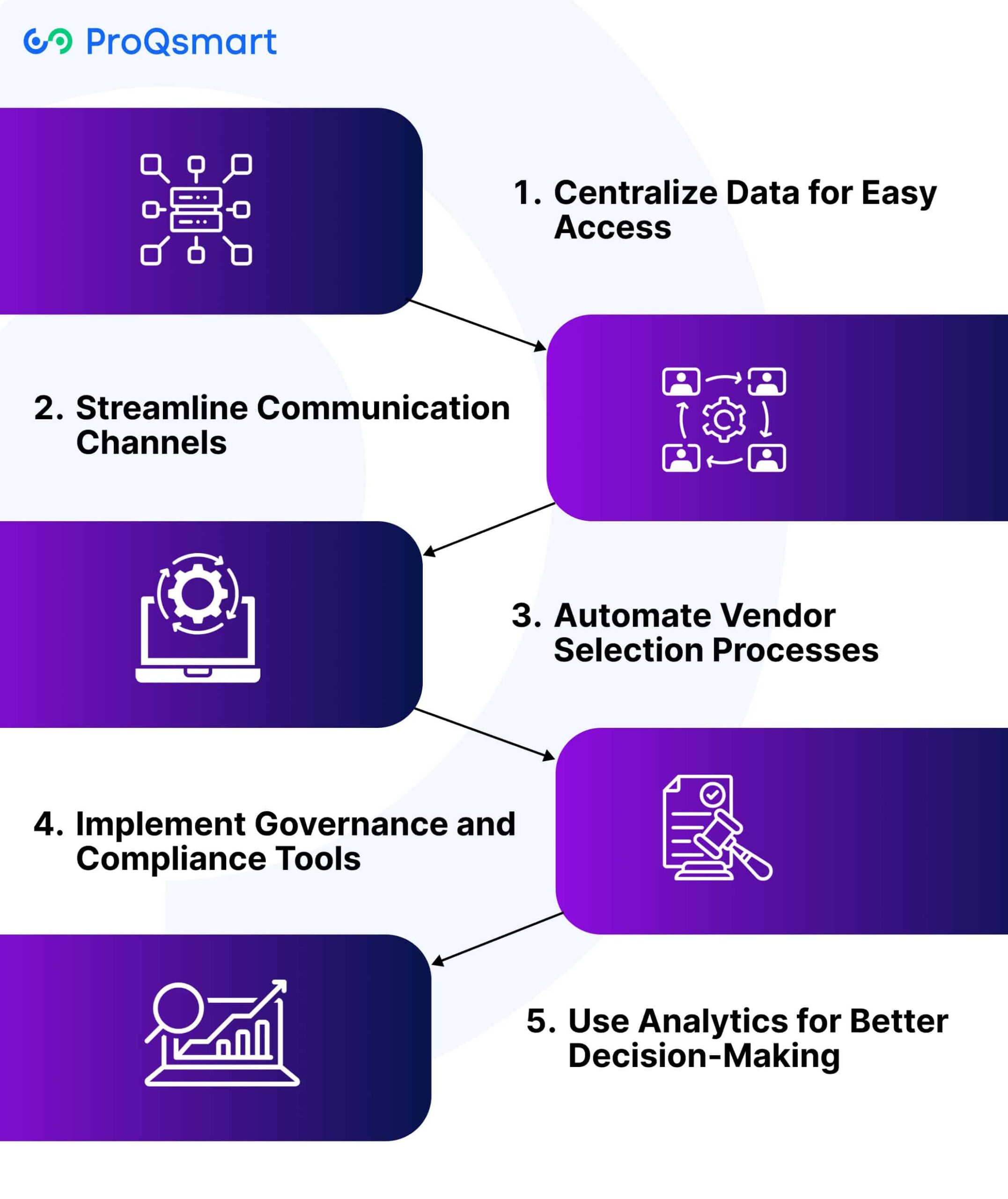
Below are key strategies to optimize your RFI process using e-sourcing technology:
- Centralize data for easy access.
- Streamline communication channels.
- Automate vendor selection processes.
- Implement governance and compliance tools.
- Use analytics for better decision-making.
1. Centralize Data for Easy Access
Centralizing supplier data makes it easier for procurement teams to find all the information they need, whenever they need it—all in one place. This removes data silos, making it less likely that RFIs will be missed.
Centralized databases foster collaboration between teams too, since stakeholders can easily share supplier information with one another. It closes the information gap, allowing for faster turnaround on supplier questions. For example, ProQsmart’s centralized platform helps streamline RFI management by tracking responses and utilizing data.
2. Streamline Communication Channels
Integrated communication platforms make it easier to interact with suppliers within a single compact interface. E-sourcing solutions, such as ProQsmart, promote active collaboration in real-time, enabling procurement teams and suppliers to share important updates with full transparency.
Centralized and streamlined communication minimizes chances for miscommunication and provides messaging integrity, both of which are essential to fair RFIs. These tools increase visibility into supplier relationship management by centralizing data sharing.
3. Automate Vendor Selection Processes
Automating vendor evaluations reduces manual errors and accelerates the RFI timeline. E-tendering features, such as those offered by ProQsmart, analyze supplier capabilities and manage documents efficiently.
Algorithms further enhance accuracy, ensuring the selection of qualified suppliers while saving time.
4. Implement Governance and Compliance Tools
Additionally, governance tools are key to ensuring process discipline and reducing risk. They help to ensure compliance with industry standards and regulations, while increasing accountability.
E-sourcing technologies, such as ProQsmart, allow for compliance by tracking auditable sourcing data, creating transparency across the entire RFI process.
5. Use Analytics for Better Decision-Making
Analytics give you a big picture of supplier performance and market activity. AI-driven platforms such as ProQsmart can leverage predictive analytics to determine the future reliability of a given supplier and help shape procurement strategy.
This more data-driven approach ensures that organizations select the best-performing suppliers and make sourcing decisions that are in line with enterprise business goals.
Best Practices for RFI Optimization
Ensuring that you select the right supplier is crucial for developing strong, successful partnerships and driving an efficient procurement workflow. By thoughtfully creating an RFI, you can respond to your project’s unique requirements while also addressing critical initiatives in the financial services industry. Here are some quick, actionable best practices to help you optimize your RFI process.
Define Clear Objectives and Scope
It’s important to set clear goals for each RFI. Clear objectives provide direction for the process, keeping all questions geared towards getting the most useful information from suppliers. If you’re looking for more sustainable suppliers, design your RFI to ask more relevant questions.
Pay particular attention to their environmental certifications and sustainability practices. Having clear objectives further helps focus the RFI to the priorities of the project, eliminating data collection that is not needed. By having a defined scope, only the appropriate suppliers should receive the RFI, facilitating less unproductive responses.
Develop Structured RFI Templates
Standardized RFI templates help make the process easier by laying out questions in a more orderly manner. Having structured templates increases the consistency of responses and puts suppliers in a position to provide more directly comparable data.
Essential questions to evaluate company capabilities, delivery timelines and pricing structures should be included. Templates aid not in the production but in the review of RFIs, saving procurement teams valuable time.
Include Detailed Eligibility Criteria
Eligibility criteria are essential to narrowing down a pool of suppliers. As an example, if a project needs to meet certain sustainability targets, then the suppliers need to be delivering on those targets.
Having detailed criteria ensures that the project goals remain the primary focus, but still allows for fair, transparent evaluations to take place.
Establish a Vendor Review Process
A robust review process enhances decision-making. Steps include assigning scoring metrics, conducting evaluations with stakeholders, and using tools like ProQsmart to automate workflows.
ProQsmart’s AI capabilities can analyze submissions, track compliance, and facilitate collaboration, ensuring thorough supplier assessments.
Provide Timely Feedback to Vendors
Timely and honest feedback helps build strong relationships with good suppliers. Constructive feedback allows vendors to improve future submissions and fosters a collaborative environment.
Feedback builds that trust, assuring better participation in future RFIs as well.


Differences Between RFI, RFP, and RFQ
Procurement professionals often encounter three key documents—Request for Information (RFI), Request for Proposal (RFP), and Request for Quotation (RFQ)—each serving distinct purposes. Knowing these differences are key for choosing the right tool to achieve your procurement objectives.
The table below provides an overview:
|
Document Type |
Purpose |
Typical Use Case |
|---|---|---|
|
RFI |
To gather general information about supplier capabilities |
Used when exploring new suppliers or determining key specifications |
|
RFP |
To collect detailed supplier information for contract awarding |
Applied when seeking comprehensive solutions or services |
|
RFQ |
To obtain pricing details for specific goods or services |
Ideal for purchasing commodities or standardized products |
Understanding the Purpose of Each Document
An RFI is the least formal of the three. It allows buyers to get a better picture of a supplier’s capabilities without any obligations.
For instance, if you’re looking for a new supplier to provide more sustainable packaging options, an RFI can help determine which vendors have the same sustainability initiatives as your business.
RFPs are more specific, soliciting detailed proposals from vendors. Organizations issue RFPs for major strategic initiatives, like when choosing a new supply chain technology partner.
Platforms like ProQsmart, for example, streamline this process, allowing companies to quickly and easily navigate e-tenders and supplier communications.
RFQs are used when the items are very detailed, and the price is for the whole item. For example, when construction companies need to buy in bulk, like, say, steel beams, they issue RFQs to guarantee they purchase the beams at the best price.
When to Use RFI, RFP, or RFQ
Each of these documents is appropriate for different situations. RFIs are used to explore options, RFPs find solutions, and RFQs identify costs.
By matching document selection with project procurement objectives, firms realize greater transparency and ease in the process.
Key Differences in Structure and Content
RFIs usually solicit general, open-ended questions about the providers’ capabilities. RFPs go in-depth with scopes of work and detailed scoring criteria.
RFQs focus primarily on line-item pricing. Integrating ProQsmart automates workflows, keeping document preparation and supplier engagement automated and seamless.
Future Trends in E-Sourcing for RFIs

The use of electronic sourcing (e-sourcing) platforms for RFIs is dramatically changing how procurement departments are drafting their strategies. By utilizing advanced technologies, procurement teams can significantly enhance their efficiency and transparency, aligning their services with the urgent balance of today’s supply chain management challenges and ensuring effective solutions for financial assistance.
AI-Powered Vendor Matching Tools
Artificial intelligence (AI) is revolutionizing vendor selection by automating the complex matching process. ProQsmart’s AI-driven analytics tools streamline market intelligence and automate bid comparison. This enables procurement teams to more quickly pinpoint the most reliable and cost-effective vendors.
As one example, ProQsmart’s continuous supplier performance monitoring rates vendors in real-time, helping to mitigate the risk of delays or poor quality service. AI-powered features help to automate many manual tasks, making it easy for procurement professionals to spend more time on strategic decision-making.
Eighty percent of organizations use RFIs to prequalify vendors. AI tools enhance this process with increased accuracy and speed.
Predictive Analytics for Procurement Decisions
Predictive analytics, in particular, is proving to be a game-changer in how agencies craft RFI strategies. By processing historical data, ProQsmart’s features offer tangible insights into market trends and pricing patterns.
For example, procurement teams can easily predict potential supply chain disruptions or expected cost increases, allowing them to make proactive decisions. Predictive tools help budget-driven procurement match expenditures to current tracking and projected spending, keeping costs under control and planners up-to-date.
Organizations that use RFIs well have shown efficiency improvements of 30% to 40%, illustrating the real-world benefits of predictive analytics.
Integration of Blockchain for Data Security
Blockchain technology has the potential to make e-sourcing platforms more transparent and secure than ever. This innovation helps to make sure all supplier transactions and communications are tamper-proof and easily auditable.
As an example, ProQsmart’s compliance functionalities use blockchain to protect sourcing information, promoting transparency and trust. Implementing blockchain technology fosters transparency within RFIs, inspiring healthy competition and establishing long-term vendor relationships.
Benefits of E-Sourcing for Construction RFIs
E-sourcing platforms have completely transformed the way construction RFIs are handled, offering a more organized and efficient approach to streamlining RFI processes. By leveraging the right data and technology, these platforms provide critical solutions to procurement’s most pressing challenges, ultimately enhancing project results and ensuring financial services align with market needs.
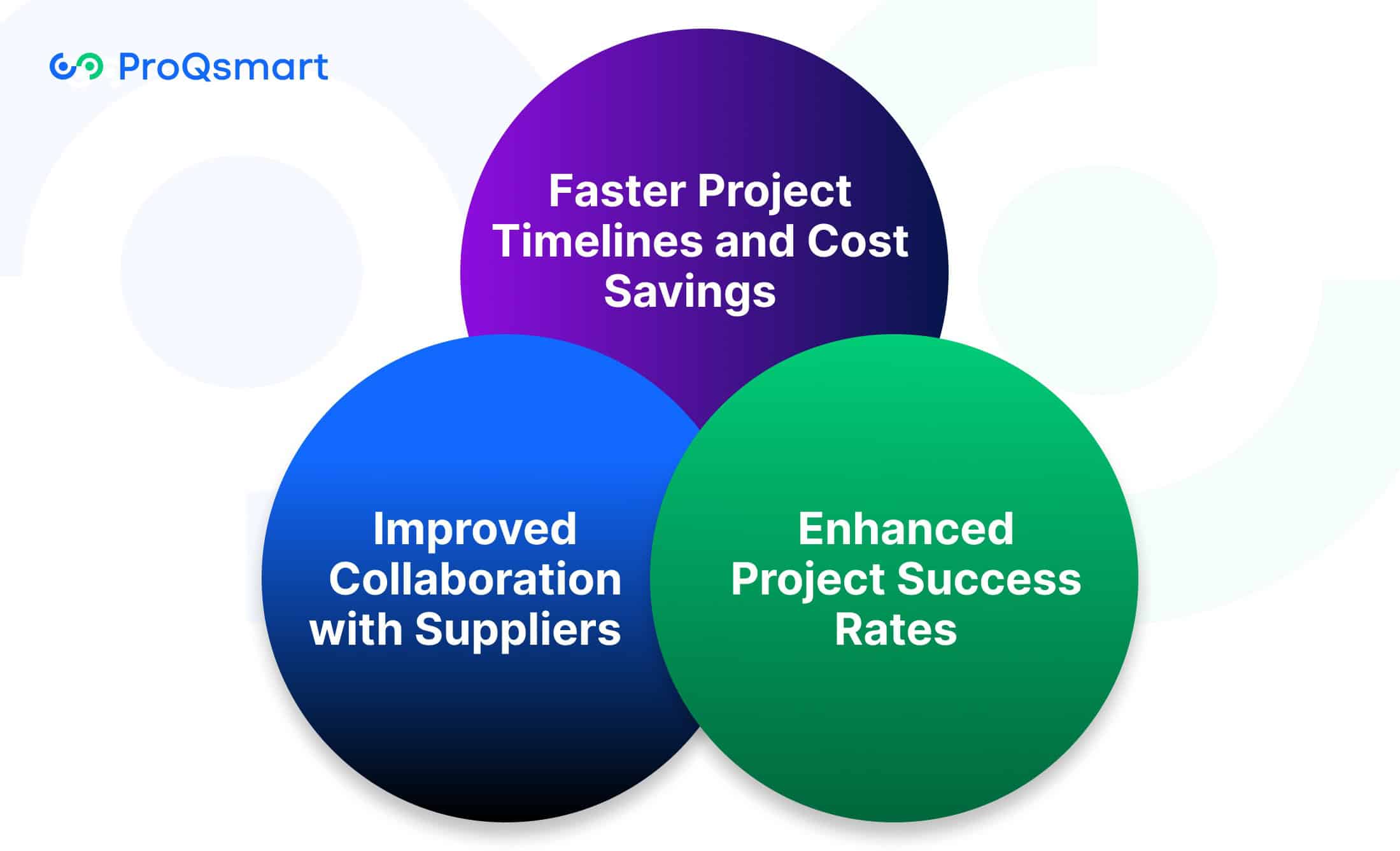
Faster Project Timelines and Cost Savings
E-sourcing platforms provide a centralized location for all information, enabling all stakeholders to access, share, and update RFI data in real-time to avoid delays. This removes the need for fragmented trackers on spreadsheets or manual monitoring that typically delay projects.
Automation tools, such as those found in ProQsmart, streamline workflows, automatically tracking every step so that they all move in sync with project timelines. For example, automated reminders and scheduling tools help prevent missed deadlines, which can save time and money down the line.
Platforms like ProQsmart provide e-tenders, online submissions, and real-time tracking. In fact, by leveraging them together, you can cut SaaS costs by 20-30% – a major infusion to your always-tightening project budgets.
Improved Collaboration with Suppliers
Effective communication is a cornerstone of successful RFIs. E-sourcing enhances collaboration by offering real-time updates and document sharing, reducing misunderstandings.
ProQsmart strengthens supplier relationships through its collaboration tools, ensuring alignment between project needs and vendor capabilities. These platforms improve response rates for RFIs, addressing the common problem of over 20% of RFIs going unanswered.
This fosters a more proactive dialogue, helping businesses evaluate vendors’ ability to meet technical and logistical requirements.
Enhanced Project Success Rates
Advanced evaluation tools offered within e-sourcing platforms further simplify vendor selection by quickly narrowing down suitable vendors based on customized criteria.
Take ProQsmart’s supplier performance monitoring, for instance, which provides in-depth clarity into a vendor’s performance history to help ensure it meets your project requirements.
Additionally, e-sourcing opens the door to valuable market insights and emerging technological innovations, allowing businesses to stay at the forefront of industry advancements. Such transparency into vendor capabilities and available solutions leads to improved decision-making and increased project success rates.
Conclusion
E-sourcing has changed the game when it comes to how we manage RFIs, providing obvious opportunities to save time and make more informed decisions. It streamlines workflow, improves productivity, and ensures you avoid lagging behind in a competitive industry. With the right technology, you get more visibility into your suppliers, reduce wasteful spending, and foster better collaboration. These tools make handling construction RFIs easier, maximizing efficiencies, minimizing disruptions, and delivering results with greater confidence.
Keeping up with industry changes and always following proven best practices puts you ahead of the game. It’s not just about reducing RFIs—it’s about developing a deeper, more adaptive procurement approach to face the challenges ahead.
Ready to elevate your procurement processes? Discover how ProQsmart can transform your approach to RFIs and supplier collaboration. Take the crucial first step today—book a demo with ProQsmart and unlock the potential for greater efficiency and success in your construction projects!