

What is Responsible Sourcing? – 2024

6 minutes read

Table of Contents

In today’s globally interconnected world, the concept of responsible sourcing has taken center stage as businesses strive to align their operations with ethical practices and sustainability. Sourcing is more than a buzzword; it’s a comprehensive approach that ensures the products and services procured by businesses are obtained in a sustainable and ethical manner. This blog delves into what responsible sourcing entails, its importance, and the strategic advantages it offers to businesses.


What is Responsible Sourcing?

Responsible sourcing is the process of ensuring that the procurement of goods and services is done in a way that actively manages social, ethical, and environmental risks along the supply chain. This approach goes beyond traditional buying decisions that focus primarily on price, quality, and delivery times to include the welfare of workers, environmental impact, and ethical business practices.


Key Elements of Responsible Sourcing

1. Ethical Labor Practices

Ensuring that all workers in the supply chain are treated fairly, work in safe conditions, and receive fair wages.

2. Environmental Impact

Minimizing the environmental footprint of procurement activities by sourcing goods and services that are produced sustainably, using eco-friendly materials and processes.

3. Transparency

Maintaining open and honest communication within the supply chain about sourcing practices, allowing stakeholders to verify the ethical credentials of products.

4. Supplier Engagement

Working closely with suppliers to help them understand and implement sourcing practices, including training and support where necessary.


The Importance of Responsible Sourcing
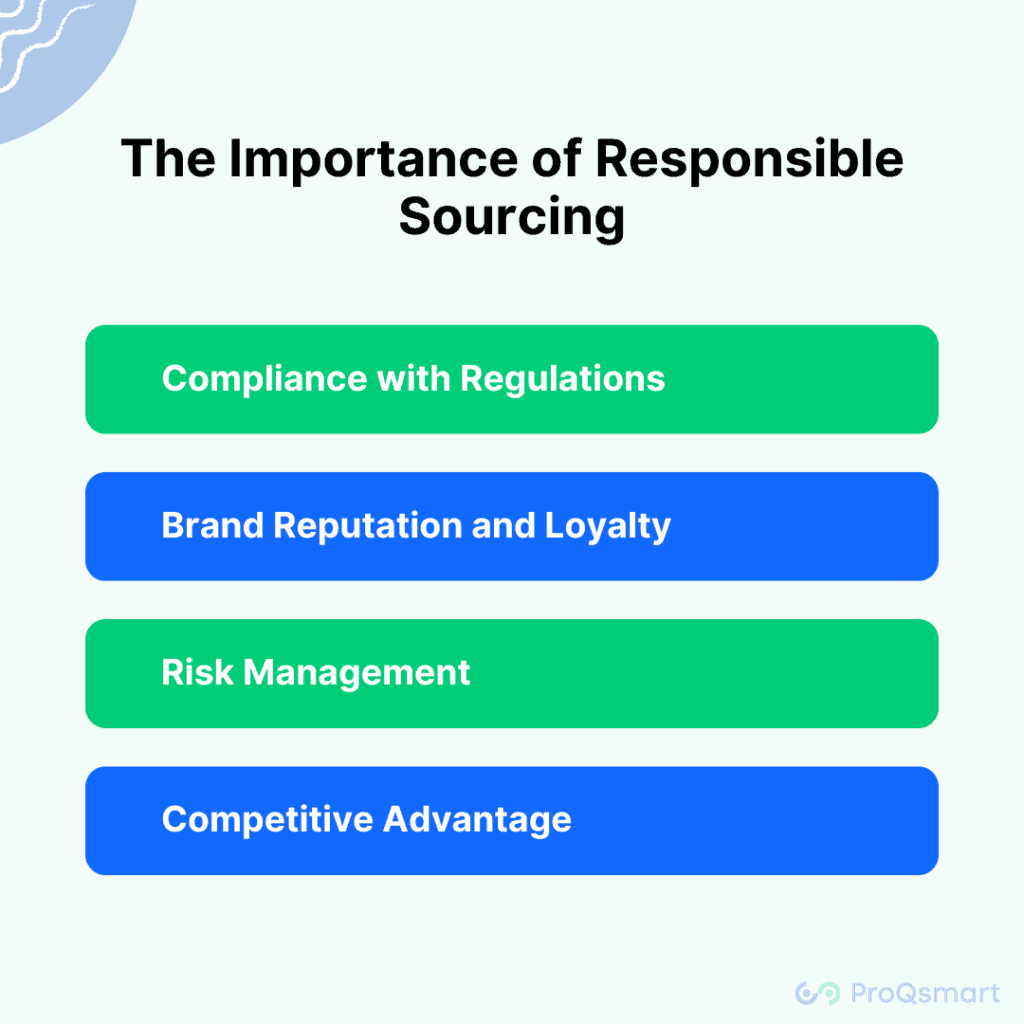
Responsible sourcing is vital for several reasons:

1. Compliance with Regulations

Many countries have strict regulations regarding labor practices and environmental protection. Engaging in sourcing helps businesses comply with these laws and avoid potential legal issues.

2. Brand Reputation and Loyalty

Consumers are increasingly aware of and concerned about where and how products are made. Companies that prioritize sourcing can enhance their brand reputation, foster customer loyalty, and attract like-minded consumers.

3. Risk Management

By taking control of their supply chains and ensuring ethical practices, businesses can mitigate risks such as reputational damage or disruptions caused by unethical suppliers.

4. Competitive Advantage

Companies that lead in sustainable practices often gain a competitive edge in their markets, appealing to stakeholders and investors who prioritize corporate responsibility.

Implementing Responsible Sourcing: A Step-by-Step Approach

1. Define Clear Sourcing Criteria

Establish criteria that suppliers must meet regarding ethical labor practices, environmental impact, and product quality.

2. Conduct Supplier Assessments

Regularly evaluate suppliers to ensure they adhere to the established criteria. This can involve audits, site visits, and sustainability reporting.

3. Foster Supplier Development

Help suppliers improve their practices by providing training and resources. This improves compliance and strengthens the supplier relationships.

4. Integrate Sustainability into Procurement Policies

Ensure that procurement policies reflect the commitment to sourcing by explicitly including sustainability as a core criterion in supplier selection and evaluation.

5. Leverage Technology and Data

Use procurement technologies that enable better tracking of supply chain practices and gather data to measure the effectiveness of responsible sourcing strategies.

6. Communicate and Report

Be transparent about your sourcing practices and progress. Regular reporting to stakeholders helps build trust and accountability.

Conclusion

Responsible sourcing is an integral part of modern business operations that aligns with global efforts towards sustainability and ethical practices. By adopting responsible sourcing, companies contribute positively to the world and build a foundation for long-term business success. It requires a proactive approach to supply chain management but delivers substantial rewards in terms of brand reputation, customer loyalty, and operational resilience.
FAQs

Responsible sourcing is the practice of procuring goods and services in an ethical, sustainable, and socially manner. It involves considering the environmental, social, and economic impacts of procurement decisions.
Responsible sourcing is important because it helps businesses mitigate risks, comply with regulations, improve brand reputation, and meet the increasing consumer demand for ethically produced goods. It also contributes to the sustainability and social responsibility of a business.
Key elements include ethical labor practices, environmental sustainability, transparency, and active supplier engagement to ensure that all aspects of the supply chain adhere to ethical and sustainable practices.
Responsible sourcing can enhance a company’s reputation, attract and retain customers who value ethical practices, reduce risks associated with supply chain disruptions, and potentially lower costs by improving efficiencies and fostering innovation.
Companies can implement sourcing by developing clear policies, conducting thorough supplier assessments, engaging in continuous supplier development, integrating sustainability into procurement strategies, and using technology to monitor compliance and performance.
Challenges may include higher initial costs, difficulty in finding suppliers who meet sourcing criteria, resistance to change within the supply chain, and the need for ongoing monitoring and compliance verification.
Responsible sourcing often strengthens supplier relationships by building trust and cooperation, encouraging mutual growth, and fostering long-term commitments between the company and its suppliers.
Yes, small businesses can engage in sourcing by focusing on local and smaller suppliers who can adhere to ethical practices, using their agility to quickly adapt sourcing strategies, and building close, transparent relationships with their suppliers.
Technology plays a critical role in sourcing by providing tools for better tracking and reporting of supply chain activities, facilitating transparent communication, and enabling efficient data management for sustainability metrics.
Companies should communicate their sourcing efforts transparently and openly through sustainability reports, marketing materials, and direct communications to stakeholders. Regular updates about progress and challenges help build credibility and trust with consumers, investors, and other stakeholders.

Section Title

Drowning in Attachments? How to Manage Vendor Responses in One Place

There’s a moment every procurement team knows too well. Your RFQ goes out. And then the inbox starts...

Why Manual Data Entry is Killing Your ROI: The Case for Auto Quote Comparison

There’s a reason procurement feels like it’s always busy but never really ahead. It’s not because...

The Invisible Financial Risk Hiding in Your Procurement Process

Are you still drowning in a sea of email attachments, fragmented spreadsheets, and scanned PDFs? For...

How an Automated RFQ Creation Tool Builds Complex Tenders in Under 20 Minutes 

In the project-based procurement, whether you are building a new franchise location, sourcing MRO...

Using AI for Quote Comparison to Normalize Messy Vendor Data | ProQsmart

AI quote comparison is the automated process of standardizing inconsistent data from multiple vendor...

Transforming Procurement: Implementing AI for Supplier Response Comparison  

AI for supplier response comparison is the application of artificial intelligence to automatically...

Beyond ChatGPT: Why You Need a Purpose-Built AI RFQ Tool for Procurement  

 To understand why you need a specialized tool, you first need to understand what generic AI...

How Automatic Bid Comparison Prevents Costly Change Orders | ProQsmart

Scope gap detection is the automated process of identifying missing line items, incomplete...

Auto Bid Comparison: Comparing 500+ Line Item Bids Without Manual Entry | ProQsmart

Automatic bid comparison is the process of using artificial intelligence to extract, normalize, and...

AI Powered Strategic Sourcing Solution

See ProQsmart in Action,

Book Your Slot Today

Ready to Transform Your
Procurement Process?

Take the first step towards smarter, more efficient
strategic sourcing and capex management.

ProQsmart Logo

Download Case Study